You go to bed on time, clock a solid eight hours, and still wake up exhausted. If you're asking yourself, "Why am I tired after 8 hours of sleep?", you're not alone. Many people experience what's often called non-restorative sleep: sleep that doesn't feel refreshing.
You may be sleeping long enough, but not deeply or consistently enough. In many cases, the issue isn't sleep duration. It's sleep quality, including how often your sleep gets interrupted by your environment. The good news: reducing nighttime noise exposure may help support more consistent rest, and earplugs are one option some people find helpful.
The Paradox of Sleep Duration vs. Sleep Quality
During a normal night, you cycle through multiple sleep stages that include light sleep, deep sleep, and REM sleep. Deep sleep and REM are important for recovery, cognitive function, and daytime energy. These cycles work best when they're relatively uninterrupted. When sleep is repeatedly disrupted, you may spend less time in the stages that feel most restorative, so you can still feel tired even after eight hours in bed.
Many sleep disruptions happen without you consciously noticing. These "micro-arousals" are very brief shifts toward wakefulness that can last just a few seconds. They may be triggered by environmental sounds like a car passing, a door closing, or a partner changing position.
You might not fully wake up, but your brain can shift into a lighter sleep stage. Over the course of a night, repeated micro-arousals can reduce continuity of sleep and contribute to non-restorative sleep.
Sleep trackers mainly estimate sleep using movement and heart rate. They can be useful for general trends, but they don't always capture noise-related disruptions or brief arousals. Your score might look fine even if your sleep feels light.
Want to learn more about sleep and focus? Check out our blogs about sleep.
The Invisible Culprit: How Environmental Noise Can Affect Your Sleep
Some public health guidance suggests that lower nighttime noise levels support better sleep. For example, World Health Organization (WHO) resources on environmental noise highlight that even relatively low indoor nighttime sound levels may contribute to sleep disturbance for some people.
Sounds don't have to be "loud" to have an impact. Irregular or sudden noises are more likely to trigger brief arousals.
Whether you live in the city, suburbs, or a quiet neighborhood, nighttime sound is common. In urban areas, it may be traffic or sirens; in quieter areas, it may be neighbors, animals, or early-morning activity.
Many people feel like they've gotten used to these sounds, but your brain can still register changes in sound while you sleep.
One disrupted night can leave you feeling run down. Over time, repeated sleep disruption from environmental factors (including noise) may contribute to persistent tiredness and reduced daytime functioning.
Common Sound Sources You've Learned to Ignore (But Your Brain May Still Notice)
Snoring, tossing and turning, heavy breathing, or small movements from a partner are common reasons for sleep interruption. Even softer, repetitive sounds can affect perceived sleep quality for some people.
HVAC systems, heating, elevators, plumbing, and sounds through shared walls can create background noise or sudden sounds that interrupt sleep.
Traffic, motorcycles, early deliveries, or a single passing car can be enough to trigger brief arousals, even if you feel like you're sleeping through it.
Why Many Sleep Solutions Don't Address Noise-Related Disruption
Melatonin, magnesium, or consistent bedtimes may help some people fall asleep, but they don't remove external noise. You might fall asleep faster yet still experience sound-related disruptions.
Apps, breathing exercises, and relaxation techniques can support winding down, but they have limited influence on external triggers like neighborhood noise.
White noise or nature sounds can mask sudden disruptions for some people, but they also introduce a constant sound source. This can be helpful for some and unhelpful for others.
Acoustic Sleep Optimization: Practical Ways to Reduce Disruptions
Many sleep resources recommend keeping the bedroom as quiet as reasonably possible at night. In real life, achieving very low sound levels can be difficult without changes to the room or added support.
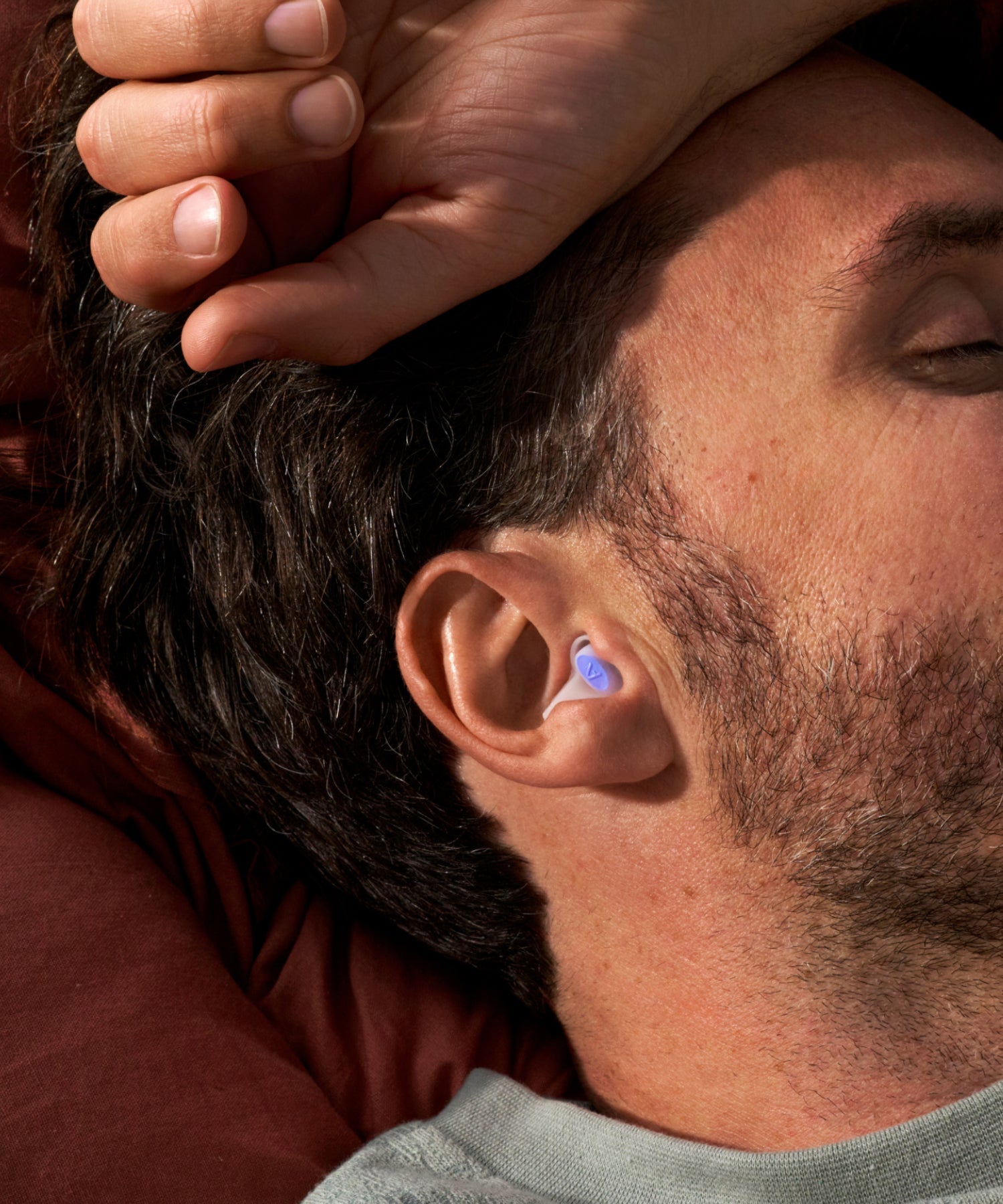
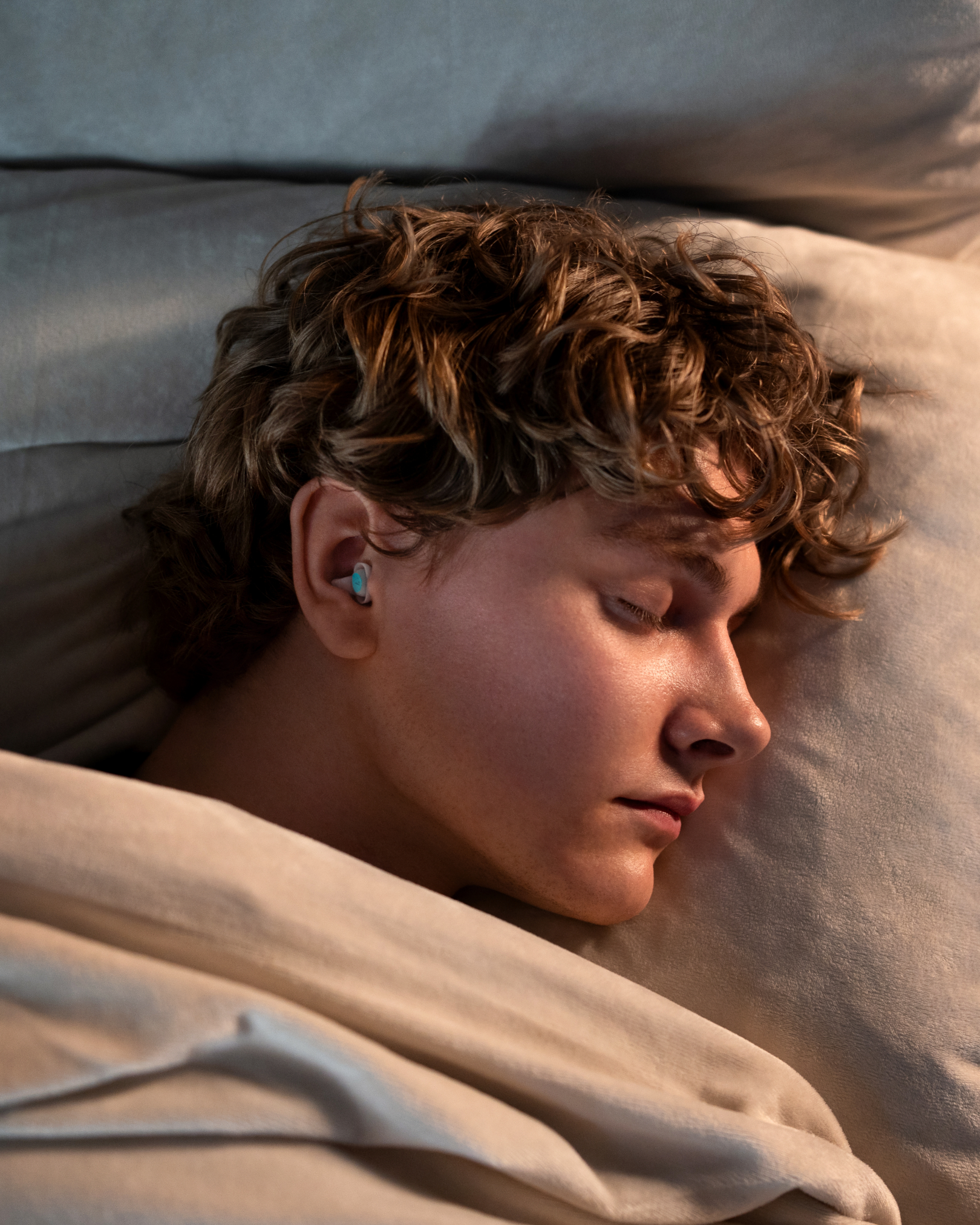
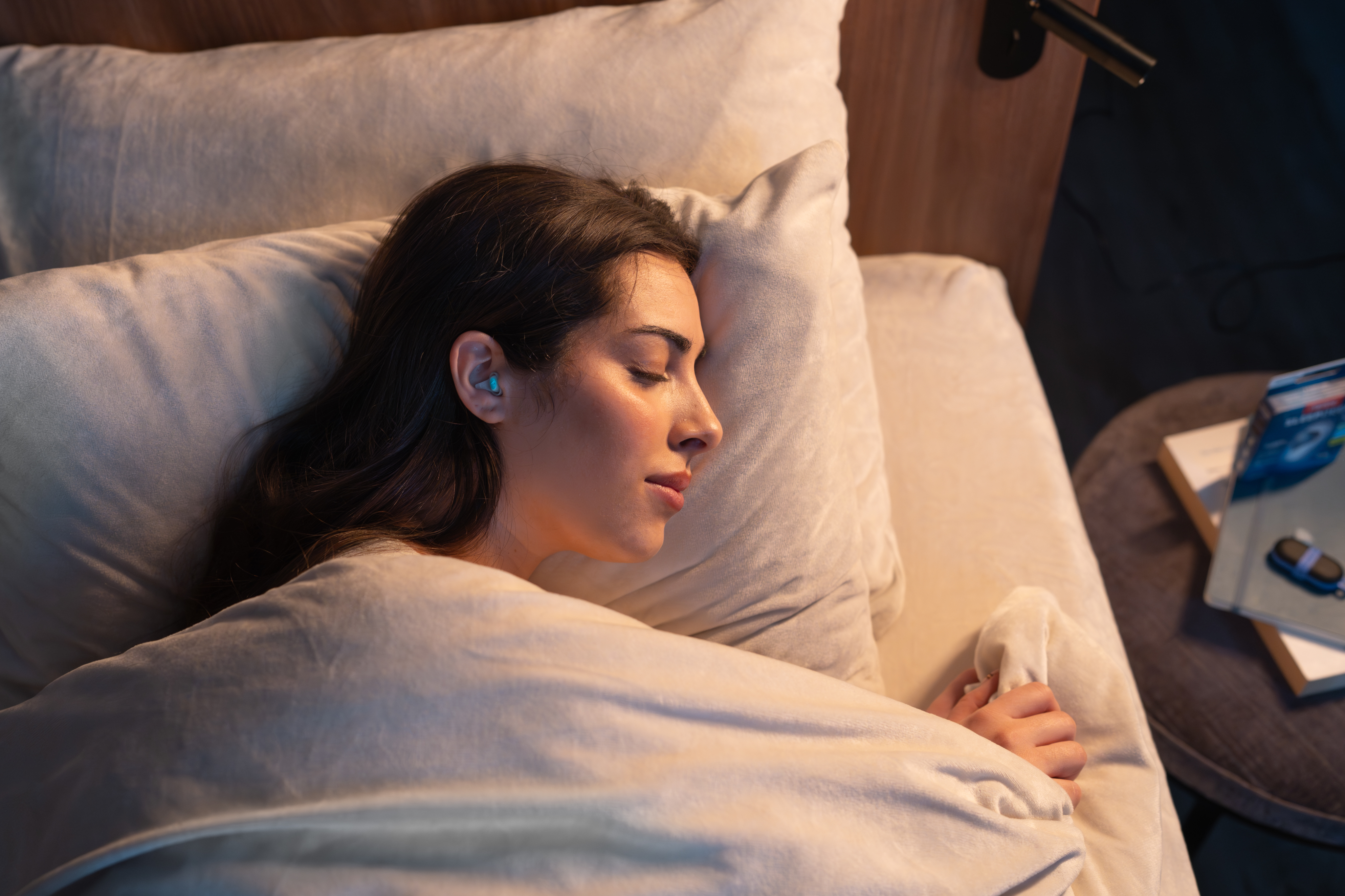
Sleep earplugs can reduce perceived noise and help some people maintain more continuous sleep.
If you use earplugs, always test whether you can still wake to your alarm and follow product guidance for safe use. Hearing protection performance varies based on fit, frequency, and volume of sounds.
A product option within Alpine's range is SleepDeep earplugs.
For side sleepers, comfort and pressure distribution matter. Poorly fitting earplugs can cause discomfort and reduce consistent use. Alpine offers earplugs designed for different sleep preferences.
Options to Reduce Noise-Related Sleep Disruption
Overview of Acoustic Approaches
There are three common approaches:
- Sound masking
- Passive noise reduction (e.g., earplugs)
- Environmental modifications (e.g., sealing gaps, heavier curtains)
Passive protection can reduce perceived noise without adding another sound source.
Depending on the situation, reducing noise exposure (sometimes even by a modest amount) may help lower the chance of brief sound-related arousals and improve perceived sleep quality. Individual results vary.
Consider comfort, hygiene, reusability, and a design intended for sleeping. Alpine's sleep collection is designed for comfortable wear during rest.
Implementing Your Own Acoustic Sleep Strategy
Try a quieter sleep setup for one week and note how you feel when you wake up. Your subjective alertness can be a useful indicator alongside tracker data.
Sleep quality is often supported by a combination of lower noise, reduced light, a cool room temperature, and a consistent routine.
Still extremely tired despite improved sleep conditions? Sleeping a full 8 hours but waking up exhausted anyway? Consult a doctor or sleep specialist to rule out underlying medical causes.